


Mar 26, 2026 9 min read
How to combine apartments in NYC: the complete guide (costs, approvals & timeline)

Space is one of the most valuable commodities in New York City. As families grow or lifestyle needs change, many homeowners look for ways to create a larger home without leaving the building or neighbourhood they love.
One increasingly popular solution is combining two apartments into one larger residence. By purchasing an adjacent unit and renovating both spaces together, homeowners can create a custom apartment with significantly more square footage.
However, combining apartments in NYC is not as simple as removing a wall. The involves building approvals, architectural plans, city filings, and a full construction project.
This guide explains everything homeowners should know about combining apartments in New York City, from feasibility and approvals to construction, costs, and long term considerations.
Why homeowners combine apartments in NYC
Large apartments are limited in many New York City buildings. In prewar buildings especially, apartments were often designed for a different era and may not offer the space modern families need.
Combining apartments allows homeowners to create larger and more functional layouts without moving to a different building or neighborhood.
Common reasons homeowners choose to combine apartments include:
- Creating a larger primary residence
- Adding additional bedrooms or home offices
- Improving inefficient layouts
- Accommodating a growing family
- Creating space for multi-generational living
- Increasing long term property value
When done correctly, the result can feel like a completely new apartment designed specifically for the homeowner's needs.
Types of apartment combinations
Apartment combinations typically fall into two primary categories.
Horizontal combination
A horizontal combination connects two apartments located next to each other on the same floor.
This is the most common type of combination because it typically requires fewer structural changes.
Typical work includes:
- Creating an opening between apartments
- Reconfiguring walls and layouts
- Relocating kitchens or bathrooms
- Upgrading electrical and plumbing systems
Because the apartments are already on the same level, these projects are often more straightforward.
Vertical combination
Vertical combinations connect apartments located above or below one another.
These projects require creating an opening in the floor slab and installing an internal staircase between the apartments.
Vertical combinations often require:
- Structural engineering review
- Reinforcement around the stair opening
- Careful stair placement within the layout
- Additional fire safety considerations
Because of these requirements, vertical combinations are typically more complex and expensive.
Co-op vs condo rules for apartment combinations
One of the most important factors in an apartment combination project is the type of building ownership.
Combining apartments in a co-op
Co-op boards generally have more control over renovation projects and may impose stricter guidelines.
Many co-op boards review combination proposals carefully to ensure structural changes, plumbing modifications, and noise impacts are manageable
Some co-op boards may require:
- Maintaining two entrances
- Maintaining separate electrical meters
- Maintaining certain plumbing configurations
- Adhering to noise restrictions
In most cases, the apartments remain separate share allocations even after the renovation.
Combining apartments in a condo
Condo buildings are usually more flexible, although approval is still required. In some condo buildings, apartments can be legally combined into a single tax lot. However, this depends on the building's governing documents and management policies.
Confirming whether a combination is allowed
Before purchasing an adjacent apartment or beginning renovation plans, it is important to confirm that the building allows apartment combinations.
This typically involves reviewing:
- The building offering plan
- House rules and alteration guidelines
- Previous apartment combinations in the building
- Structural limitations between units
If combination projects have been completed in the building before, the approval process is often more predictable.
Building approval requirements
Most NYC buildings require a formal alteration package before construction can begin.
This package typically includes:
- Architectural drawings
- Contractor insurance documentation
- Construction schedule
- Security deposit for potential damages
The building's architect or engineer often reviews the plans and may request revisions before granting approval.
Only after building approval is obtained can the project move forward with city permits and construction planning.
Department of buildings filings
Most apartment combinations require filings with the New York City Department of Buildings.
Architectural plans must be prepared and submitted to obtain the appropriate permits.
Typical filings include:
- Architectural plans
- Structural drawings
- Plumbing drawings
- Electrical drawings
Many apartment combinations proceed under an Alteration Type 2 filing, although projects involving structural work may require additional engineering review.
Structural feasibility
Not all apartments can be easily combined.
A structural engineer must evaluate whether walls between the apartments are load bearing and whether modifications are possible.
Important structural considerations include:
- Load bearing walls
- Column locations
- Floor slab structure
- Beam configurations
In some cases, openings can be created but require steel reinforcement.
Plumbing constraints
Plumbing is one of the biggest design limitations in apartment combinations.
Bathrooms and kitchens are typically connected to vertical plumbing stacks that serve multiple floors of the building.
Because of this, relocating plumbing fixtures far from their original locations may not always be possible.
Design teams often develop layouts that work around existing plumbing infrastructure.
Electrical considerations
When apartments are combined, the electrical systems must also be evaluated.
Two main approaches are typically considered.
Some projects keep both apartments' electrical panels and meters. This simplifies the work and avoids coordination with the utility company.
Other projects combine the electrical systems into a single panel and meter, which can create a cleaner setup but may require additional approvals and upgrades.
HVAC and mechanical systems
Heating and cooling systems may also need to be adjusted when apartments are combined.
Depending on the building, apartments may use:
- PTAC units
- Through wall air conditioning units
- Split systems
- Central HVAC systems
The new layout may require additional zones or upgrades to support the larger space.

Certificate of occupancy considerations
In some cases, combining apartments may require updates to the building's Certificate of Occupancy.
This depends on the type of building and the extent of the structural work involved.
In condo buildings, it may be possible to legally merge apartments into a single unit. In co-op buildings, apartments typically remain separate legal units even after they are physically connected.
An architect can help determine whether any changes to the Certificate of Occupancy are required.
Landmarks buildings
If the building is located within a historic district or is designated as a landmark, additional approvals may be required from the Landmarks Preservation Commission.
Interior renovations are usually permitted, but exterior changes such as new windows or façade penetrations may require review.
Construction scope
Apartment combination projects typically involve a full renovation in addition to the physical connection between the units.
Common construction work includes:
- Demolition and wall removal
- Structural reinforcement
- New kitchens and bathrooms
- Electrical and plumbing upgrades
- Flooring and finishes
- Custom millwork and storage
Because of the scale of the work involved, many homeowners choose to renovate the entire apartment during the combination project.
Costs of combining apartments in NYC
Costs vary depending on the scope of work, finish level, and complexity of the project.
Typical renovation costs range from:
- $250 to $400 per square foot for moderate renovations
- $400 to $700 per square foot for higher end renovations
- $700+ per square foot for luxury renovations
Vertical combinations usually cost more because of structural work and staircase installation.
Carrying costs during renovation
Many homeowners underestimate the carrying costs associated with apartment combinations.
During the renovation, you may need to cover:
- Maintenance or common charges for both apartments
- Mortgage payments
- Property taxes
- Insurance
- Temporary housing costs
Because the renovation process may take several months, these costs should be factored into the overall project budget.
Typical timeline for combining apartments in NYC
Apartment combination projects typically follow several phases.
1. Feasibility and planning
2. Design and architectural drawings
3. Building approval
4. Department of buildings filing and permits
Construction
Most apartment combination projects take approximately 6-12 months from planning to completion.
Real apartment combination example in NYC
Apartment combinations can vary depending on the layout and structure of the existing units.
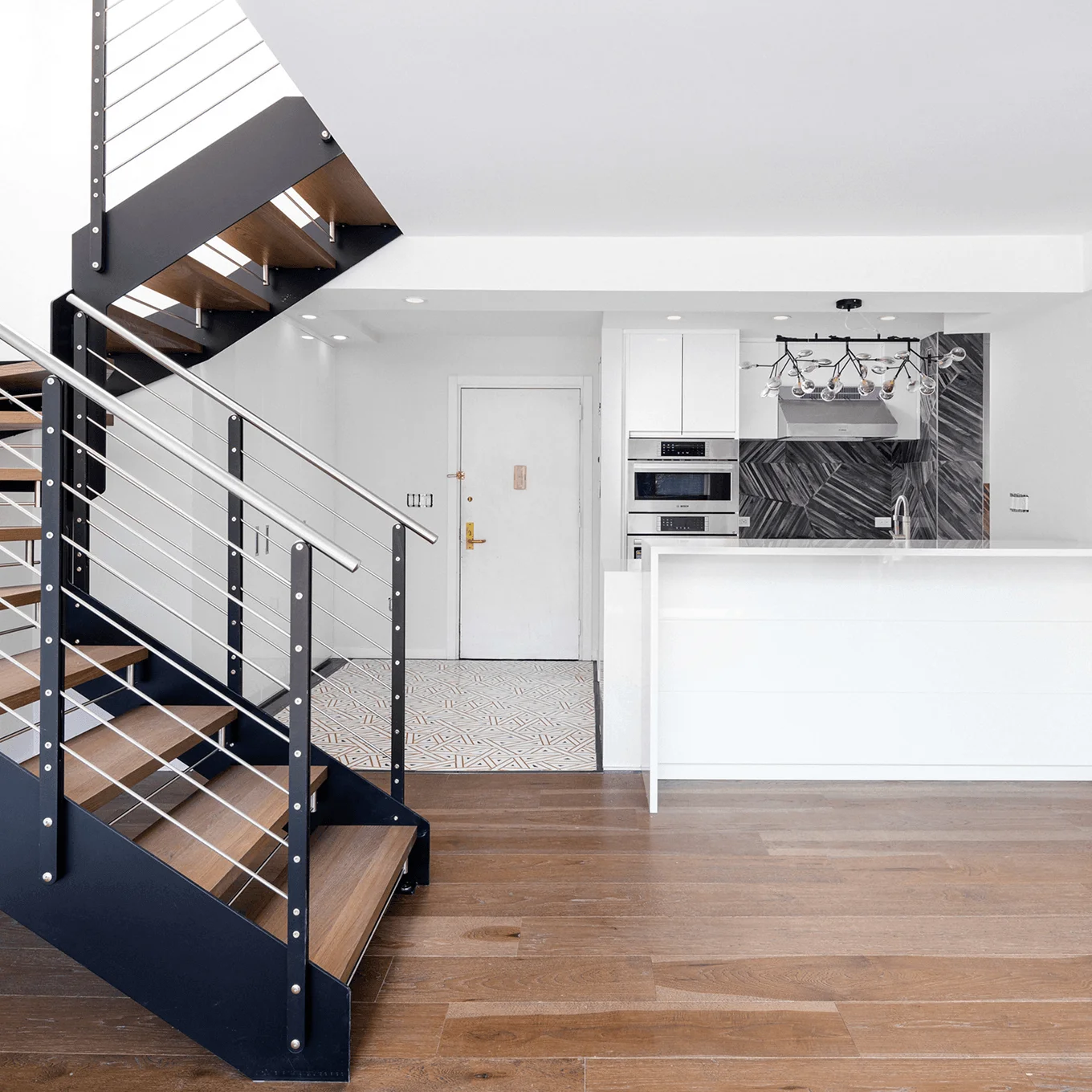
One example is a Chapter project on the Upper West Side where two duplex apartments were combined into one larger residence. The goal was to merge the two units into a single cohesive home while improving circulation and functionality across both levels.
The renovation involved opening walls between the duplex apartments, reconfiguring the layout, and completing a full renovation that included a new kitchen, updated bathrooms, and new finishes throughout the home.
By carefully redesigning the layout, the two duplex apartments were transformed into one seamless residence that functions as a single home.
You can view the full project here: https://www.hellochapter.com/project/upper-west-side-duplex-apartment-renovation/
Is combining apartments worth It?
In many cases, combining apartments can increase property value, particularly when larger apartments are rare in the building.
However, the outcome depends on the resulting layout and market demand.
Well designed three and four bedroom apartments often command strong resale value, especially in family oriented neighborhoods.
On the other hand, extremely large apartments in buildings that primarily contain smaller units may appeal to a narrower group of buyers.
Evaluating the potential resale impact is an important step before moving forward with a combination project.
Questions to ask before buying the adjacent apartment
Before purchasing a neighbouring apartment for a combination project, consider the following questions.
- Does the building allow apartment combinations?
- Have other combinations been approved in the building?
- Are the apartments structurally adjacent?
- Will plumbing stacks support the desired layout?
- Are there building restrictions on vertical combinations?
- What approvals will be required from the building and the city?
Understanding these factors early can help avoid costly surprises later.
Common mistakes when combining apartments in NYC
Apartment combinations can deliver great results, but poor planning can create delays and unexpected costs.
Buying the second apartment too quickly
Underestimating the approval process
Ignoring plumbing limitations
Forgetting carrying costs
Creating an oversized apartment
FAQs: Combining Apartments in NYC
Can you legally combine apartments in New York City?
Yes. Most apartment combinations require approval from the building and filings with the New York City Department of Buildings. Architectural drawings and construction permits are typically required before work begins.
How long does it take to combine apartments in NYC? experience?
Most apartment combination projects take between 6 and 12 months from planning to completion.
Do co-op boards allow apartment combinations?
Many co-op boards allow combinations, but approval is not guaranteed. Boards often review structural changes, plumbing modifications, and the impact on neighboring apartments.
How much does it cost to combine apartments in NYC?
Costs vary depending on the renovation scope. Most apartment combinations range between $250 and $700 per square foot, depending on finishes and complexity.
Can apartments be separated again later?
In some cases yes, especially if the apartments remain legally separate units. However, separating them later may require additional approvals.
Do you need an architect to combine apartments?
Yes. Most apartment combination projects require architectural drawings to obtain building approval and Department of Buildings permits.
Final thoughts
Combining apartments in New York City can be one of the most effective ways to create a larger and more functional home without leaving your building or neighbourhood.
However, these projects involve careful planning, multiple approvals, and a full renovation process.
Working with experienced architects, engineers, and contractors who understand the complexities of NYC buildings can help ensure that the project is executed smoothly and successfully.
With the right planning and team, two smaller apartments can be transformed into a seamless and highly desirable residence.
Start your renovation
with Chapter