

Jun 26, 2026 13 min read
Home Renovation in New Jersey: What It Really Costs, How Long It Takes, and How to Plan It Right

Key takeaways for New Jersey homeowners
- Most New Jersey kitchen renovations require more than just a cabinet-and-countertop budget. Layout changes, plumbing, electrical work, permits, and lead times can significantly impact the final cost.
- Bathrooms are small but require extensive coordination among trades. Proper sequencing of waterproofing, tile, plumbing, glass, electrical work, and inspections is essential.
- Full-home renovations in New Jersey typically range from $150 to $400 per square foot, depending on scope, property age, finish level, and local approvals.
- Permits and approvals are local. A project in Hoboken, Montclair, or Ridgewood may follow a different process than one in a neighboring town.
- To reduce stress and protect your budget, complete design, scope, selections, permit planning, and budget alignment before construction begins.
Home renovation is both exciting and personal.
You are not just selecting cabinets, tile, lighting, flooring, or paint. You are shaping how your family lives each day—how mornings feel in the kitchen, the calm of your bathroom at night, how your home welcomes guests, and how it supports your next chapter Renovation.
After years of leading renovations in New Jersey, I have learned that success relies on planning, communication, accurate budgeting, and a single accountable team—not just attractive renderings.
This is especially important in New Jersey.
Whether you are renovating a historic home in Montclair, updating a condo in Hoboken, or planning a full home renovation in Bergen, Hudson, Essex, Union, or Morris County, the right plan saves time, money, and stress. Chapter Renovation's New Jersey team serves these areas, specializing in single-family homes, townhomes, condos, apartments, and historic renovations, with integrated design, construction coordination, project management, and technology-supported communication.
This guide provides New Jersey homeowners with a practical overview of 2026 renovation costs, timelines, permits, budgeting, and selecting the right renovation partner.
Why New Jersey Homeowners Are Renovating in 2026
New Jersey is a complex renovation market, with older homes, dense communities, strict municipalities, condo boards, historic districts, and homeowners seeking both beauty and practicality.
National renovation activity remains strong. Harvard’s Joint Center for Housing Studies projects annual homeowner improvement and repair spending will remain historically high, exceeding $500 billion into 2026, even as growth slows later in the year. Homeowners will continue to need skilled labor, careful planning, and reliable project management.
In New Jersey, homeowners renovate for several personal reasons:
- They love their neighborhood, but their home no longer fits their life.
- They want a better kitchen because the kitchen has become the center of the home.
- They want bathrooms that feel clean, calm, and modern.
- They need home offices, guest rooms, better storage, finished basements, or more functional family space.
- They want to stay in their current home instead of competing for limited move-in-ready inventory.
- They want to protect long-term value by updating aging systems, layouts, and finishes.
How Much Does a Home Renovation Cost in New Jersey?
There is no single answer. Most full-home renovations in New Jersey range from $150 to $400 per square foot in 2026, but the actual cost depends on the specific scope.
Two kitchens may appear similar in photos but have very different budgets. One may retain the existing layout, while another involves moving plumbing, opening walls, upgrading electrical, adding custom cabinetry, and obtaining permits. The finished photo does not reveal the work behind the walls.
At Chapter Renovation, we aim to provide clarity early in the process. Cost estimates are only meaningful when tied to a defined scope.
The following are planning ranges, not formal quotes. They help you understand potential project costs before design, site conditions, selections, and approvals are finalized.
-
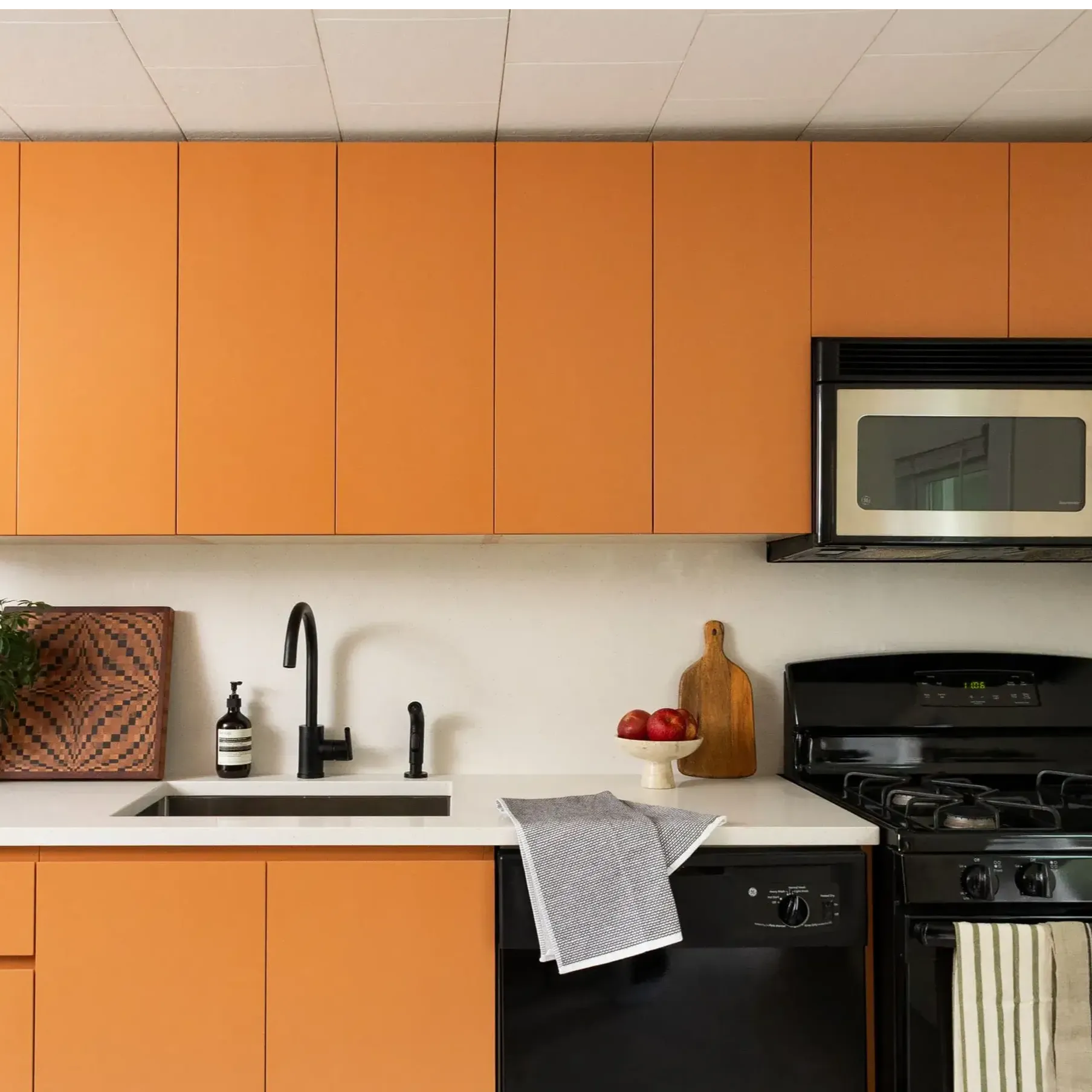
Kitchen Renovation Costs in New Jersey
The kitchen remains one of the most important rooms in the home. It is where people gather, families begin and end their day, and buyers quickly assess whether a home feels up to date.
Kitchen renovation type Typical planning range What it usually includesEntry-level kitchen refresh $30,000–$55,000 Cabinet refacing or limited cabinetry, new counters, fixtures, appliances, lighting, paint, and cosmetic updatesMid-range kitchen renovation $55,000–$110,000 New cabinetry, quartz or stone countertops, better appliances, improved lighting, tile, flooring, and possible layout improvementsHigh-end kitchen renovation $110,000–$200,000+ Custom cabinetry, premium appliances, structural work, luxury finishes, expanded layout, and complex coordinationTypical construction timeline: approximately 6 to 12 weeks after design, selections, permits, procurement, and approvals are complete. More complex kitchens may require additional time.
A kitchen renovation is not only about materials; it is about proper sequencing. Cabinets must arrive on time, electrical and plumbing must be coordinated, appliances must fit the design, and stone is templated after cabinets are installed. Missing a step can delay the entire project. For more details, see our New Jersey kitchen renovation cost guide .
-
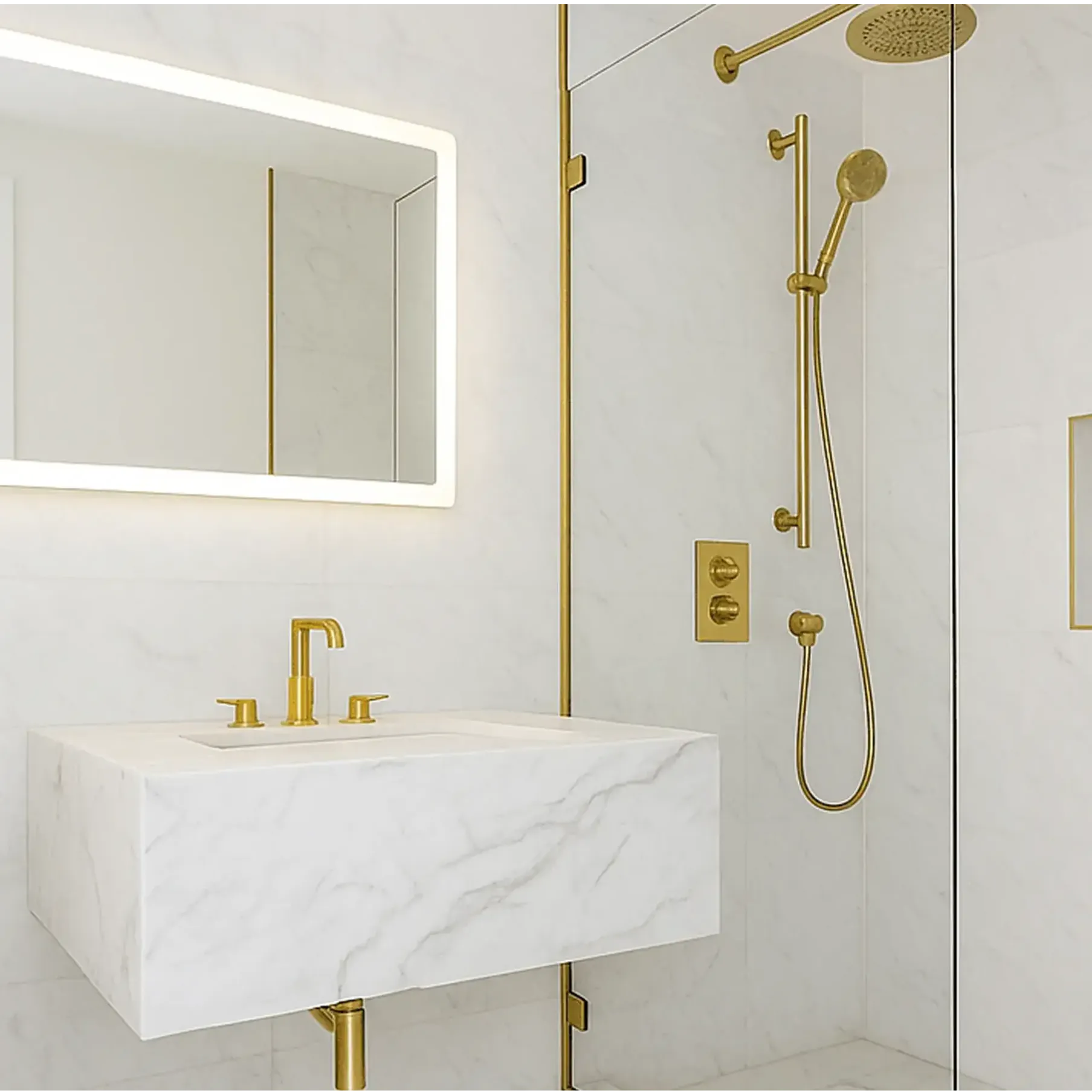
Bathroom Renovation Costs in New Jersey
Bathrooms are smaller than kitchens but require coordination among many trades. Plumbing, waterproofing, tile, electrical, ventilation, glass, fixtures, and inspections must all be properly scheduled.
Bathroom renovation type Typical planning range What it usually includesPowder room renovation $12,000–$25,000 Vanity, toilet, lighting, mirror, tile or flooring, paint, and fixturesFull bathroom renovation $25,000–$55,000 Tub or shower, tile, vanity, plumbing fixtures, lighting, waterproofing, ventilation, and finishesPrimary bathroom renovation $55,000–$120,000+ Larger footprint, double vanity, custom shower, freestanding tub, premium tile, heated floors, glass, and luxury fixturesTypical construction timeline: approximately 4 to 8 weeks for standard bathrooms, with longer timelines for primary bathrooms featuring custom tile, glass, or layout changes.
Cutting corners in a bathroom can lead to costly issues later. Proper waterproofing, slope, ventilation, and plumbing details are essential to protect your home. Our New Jersey bathroom renovation cost guide provides more information on budget drivers.
-
Full Home Renovation Costs in New Jersey
For larger projects, the budget depends on home size, property age, structural changes, mechanical systems, finish level, and whether exterior work is included.
For planning purposes, many full-home renovations in New Jersey range from $150 to $400 per square foot, depending on finishes, customization, property condition, and scope. Our full-home renovation cost guide for New Jersey covers these scenarios in detail.
Project type Typical planning rangeApartment or condo renovation, about 1,000–1,500 sq. ft. $150,000–$350,000Whole-home renovation $250,000–$800,000+Large custom renovation with structural, exterior, or systems work $800,000+Typical timeline: approximately 4 to 12 or more months, depending on design complexity, permitting, procurement, inspections, and construction scope.
A whole-home renovation consists of multiple projects completed in sequence, including demolition, framing, plumbing, electrical, HVAC, insulation, drywall, flooring, millwork, tile, painting, inspections, and finishes. A strong plan ensures a smoother process.
What Drives Renovation Costs in New Jersey?
-
1. Scope behind the walls
The scope of work behind the walls determines the cost. A simple paint and floor change is much less expensive than a full kitchen or bathroom renovation. A full basement renovation is more expensive than a basement remodel. A major systems upgrade is more expensive than a simple HVAC replacement.
-
2. Municipality and approvals
New Jersey regulations are highly localized. Each township, city, and building department operates differently. Some approvals are quick, while others take longer, and condo or HOA approvals add complexity. A renovation plan should include architectural drawings, engineering as needed, permits, building board approvals, procurement, and inspections before construction begins.
-
3. Material selections
A $40,000 kitchen and a $140,000 kitchen may share the same footprint. The difference often lies in cabinetry, appliances, stone, tile, lighting, hardware, plumbing fixtures, and custom details. Good design is not about selecting expensive items, but about choosing what fits your home, budget, and lifestyle.
-
4. Design decisions before construction
The most costly decisions are often those made too late. Incomplete design leads to guesswork during construction, resulting in delays, change orders, frustration, and budget pressure. Chapter Renovation uses a design-build model, where our design team, project managers, and construction team collaborate from the start to ensure the design is both attractive and feasible within budget.
-
5. Communication
A renovation can overcome many challenges with honest communication, but not with silence. Homeowners should always know what is happening, what decisions are needed, what has changed, and what comes next. Chapter Renovation's Renotech™ client portal provides a single platform for schedules, progress photos, financials, design information, live updates, and messages.
Do You Need Permits for a Home Renovation in New Jersey?
Often, yes. Many New Jersey renovations require building, electrical, plumbing, fire, or mechanical permits, depending on the scope of work. The exact requirements depend on the municipality, property type, and work being performed. Cosmetic updates may not require the same approvals as structural, plumbing, electrical, or HVAC changes.
Under New Jersey’s Uniform Construction Code (N.J.A.C. 5:23) , certain limited “minor work” still requires that notice be given to the local enforcing agency before work begins, with the permit application filed within five business days. Replacing finishes may be simple, but moving plumbing, opening walls, changing electrical, altering structure, adding a bathroom, or finishing a basement usually requires more planning and formal approvals. New Jersey’s Division of Consumer Affairs also lets you verify that a home improvement contractor is registered, and Business.NJ.gov outlines the building-permit and inspection process.
Permits are more than paperwork. They protect homeowners, create a record of compliant work, and help prevent issues when selling, refinancing, or insuring the property in the future.
Common New Jersey Renovation Approvals to Plan For
- Municipal building permits
- Electrical permits
- Plumbing permits
- Mechanical or HVAC permits
- Structural review or engineering, when walls, beams, or loads are affected
- Condo, co-op, HOA, or building board approval
- Historic district review, when applicable
- Inspections during and after construction
At Chapter Renovation, we help homeowners plan for these requirements early to avoid delays caused by unexpected approvals after construction is scheduled to begin.
How Long Does a Renovation Take in New Jersey?
Plan for the entire renovation timeline, not just construction. Many bathrooms take 4 to 8 weeks, kitchens 6 to 12 weeks, and full-home projects 4 to 12 or more months, with additional time for design, permits, and material lead times. on top.
The construction phase is only part of the overall renovation timeline. Homeowners should also consider discovery, design, pricing, selections, permits, procurement, and inspections. Design decisions, permit reviews, special-order materials, cabinet production, condo approvals, and engineering can all impact the project start dateDo not evaluate a renovation partner solely by how quickly they can start. Instead, assess how clearly they explain the process from initial consultation to project completion.ce.
How to Plan a Reliable Renovation Budget
- Define the real scope. Are you refreshing finishes, changing layout, opening walls, moving plumbing, upgrading systems, or renovating the whole home? Each choice changes the budget.
- Separate must-haves from nice-to-haves. A clear priority list helps the team protect what matters most if trade-offs are needed.
- Make selections early. Cabinets, tile, fixtures, appliances, flooring, and lighting all affect cost and schedule
- Include a contingency. For older homes, allocate approximately 10 to 20 percent for unforeseen conditions. A responsible budget accounts for the unknown.
- Ask what is included. Design, permits, project management, demolition, materials, labor, inspections, cleanup, and change-order procedures should be clear before you sign.
- Align design with your budget and renovate for your lifestyle, not just for resale. The 2025 Cost vs. Value Report for the Middle Atlantic region shows returns vary: a midrange bathroom remodel recouped about 80 percent of cost, while a major midrange kitchen remodel recouped 49 to 51 percent. This is not a reason to avoid kitchen renovations, but a reminder to be clear about your goals.
Design-Build vs. Traditional Renovation: Why the Team Structure Matters
In a traditional renovation, homeowners may hire a designer, architect, engineer, general contractor, subcontractors, and suppliers separately. This approach can work, but it often places the homeowner at the center of communication, coordination, and accountability.
In a design-build model, planning and construction teams collaborate from the outset. This integration ensures design decisions align with construction costs and that construction realities inform design options.
Chapter Renovation's model integrates design, planning, project management, and construction coordination into a single process. The goal is not only a beautiful renovation, but also one that is clear, buildable, budget-conscious, and easier for homeowners.
How Chapter Renovation Helps New Jersey Homeowners Renovate With More Clarity
Every renovation involves many moving parts. Our role is to make these elements easier to understand and manage. For New Jersey homeowners, Chapter Renovation assists with:
- Early scope and budget planning
- Interior design and material selection
- Architectural and engineering coordination when needed
- Permit and approval planning
- Project management and construction coordination
- Schedule, budget, and progress visibility through the Renotech™ client portal
- A single accountable team from planning through completion
We founded Chapter Renovation to provide homeowners with a renovation process that is transparent, organized, and cohesive. Chapter Renovation is a licensed and insured New Jersey general contractor (license 13VH13212400). While home renovation requires decisions, patience, and trust, it should not feel chaotic.
Questions to Ask Before Hiring a New Jersey Renovation Contractor
- Are you licensed and insured to work in New Jersey?
- Have you completed projects in my town or county?
- Who manages design, permitting, procurement, and construction?
- How do you handle budget changes or hidden conditions?
- What is included in the proposal, and what is excluded?
- Who will be my day-to-day point of contact?
- How will I see schedule updates, payment milestones, and project progress?
- Can I see completed work that is similar to my project?
- What decisions do I need to make before construction starts?
The answers to these questions are important. A renovation company does more than provide labor; it manages risk, communication, sequencing, budget, design intent, and the overall experience of transforming your home.
Final Thoughts: Renovation Is a Plan Before It Is a Project
A successful renovation begins well before demolition. It starts with honest discussions about your lifestyle, desired changes, your home’s needs, local requirements, and a realistic budget.
New Jersey homes offer character but also present complexity. Older systems, local approvals, limited space, condo regulations, historic districts, and high expectations make thorough planning essential.
If you are considering a home renovation in New Jersey in 2026, do not rush the planning phase. The more clarity you establish before construction, the more confidence you will have throughout the process.
Ready to start your New Jersey renovation?
If you are planning a renovation in Bergen, Hudson, Essex, Union, or Morris County, schedule a conversation with Chapter Renovation to discuss your home, goals, scope, budget, and timeline before construction begins.
FAQ: Home Renovation in New Jersey
How much does a home renovation cost in New Jersey?
A small renovation may start in the tens of thousands, while full-home renovations often range from $250,000 to $800,000+ depending on size, age, scope, finishes, structural work, systems, and approvals. The most useful number is always tied to a defined scope.
How much does a kitchen renovation cost in New Jersey?
A practical planning range is about $30,000–$55,000 for an entry-level refresh, $55,000–$110,000 for a mid-range kitchen renovation, and $110,000–$200,000+ for a high-end or complex kitchen renovation.
How much does a bathroom renovation cost in New Jersey?
A powder room may range from $12,000–$25,000. A full bathroom often ranges from $25,000–$55,000. A primary bathroom with a larger footprint, custom shower, premium tile, heated floors, or luxury fixtures may range from $55,000–$120,000+.
Do I need permits for a renovation in New Jersey?
Many projects require permits, especially work involving structural changes, electrical, plumbing, HVAC, new bathrooms, basement finishing, or layout changes. Requirements vary by municipality and property type.
How long does a renovation take in New Jersey?
Construction may take 4–8 weeks for many bathrooms, 6–12 weeks for many kitchens, and 4–12+ months for full-home renovations. Design, permits, material lead times, and approvals can add time before construction begins.
Is design-build better for a New Jersey renovation?
Design-build can be helpful because design, budget, procurement, permitting, and construction planning are coordinated earlier. For homeowners, that often means fewer handoffs, clearer accountability, and better communication.
Start your journey with
Chapter Renovation