
Oct 30, 2026 9 min read
The Six Phases Of A Renovation - And Where Most Projects Stall

Every renovation, whether it is a 1,000-square-foot apartment or a 10,000-square-foot estate, moves through the same six phases. The order is consistent. The relative duration changes with scope. And in our experience, most projects that run long are stalling at one of three specific phases. Understanding which phases are most prone to delay is the first step to running a project that actually finishes on schedule.

Phase 1: Feasibility and scope definition
What happens:
The homeowner, the design team, and the contractor align on what the project is. Scope, structural ambitions, target finish level, and budget range are defined.
Typical duration: 2 to 4 weeks.
How projects stall here:
Rarely. The risk in this phase is not that it runs long. The risk is that it is skipped or rushed, which causes problems three months later when scope ambiguity surfaces as conflict. A complete feasibility phase pays back five-fold across the rest of the project.
Phase 2: Design and architectural drawings
What happens:
Floor plans, elevations, material selections, kitchen and bath layouts, structural drawings, mechanical drawings.
Typical duration: 6 to 14 weeks depending on scope.
How projects stall here:
Revision loops. Every time a major design decision is revisited: the kitchen layout changes, the primary bath gets bigger, the millwork concept evolves: the architect updates drawings, the contractor recalculates, the procurement plan adjusts. Two or three revision loops on the same element can add a month to this phase.
How to prevent it:
Make major decisions in the design phase, not after it. A clear scope confirmed in feasibility makes revisions rare. A vague scope makes them inevitable.
How Chapter Renovation eliminates design revision loops:
While traditional design processes drag through endless revision cycles, Chapter Renovation utilizes photorealistic 3D pre-visualization and BIM cost modeling inside Renotech™ our proprietary technology platform during Phase 2.
Homeowners interact with exact spatial renderings and real-time budget impacts before signing off, locking in scope early and preventing downstream schedule resets.
Phase 3: Building approval and permitting
What happens:
Co-op board, condo association, or HOA review (where applicable). Department of Buildings or municipal permitting.
Typical duration: 4 to 16 weeks depending on building and jurisdiction.
How projects stall here:
This is the most common stall phase. Co-op boards meet monthly and may request revisions; missing a board cycle adds nearly a month. DOB filings or municipal permits can be delayed by incomplete submissions, code questions, or jurisdictional backlogs. Buildings with strict alteration agreements may require multiple rounds of professional review.
How to prevent it:
Submit complete packages on the first pass. Anticipate the building professional's questions. Maintain relationships with the relevant authorities. This is the workstream most worth investing specialist attention in.
How Chapter Renovation prevents approval stalls:
Traditional contractors treat municipal filings as a side task for a single PM, letting paperwork sit in review loops for months.
Chapter Renovation deploys a dedicated DOB and Board Approvals team that uses Renotech™ to track review statuses and manage complex filings in real time.
By submitting complete, code-compliant packages on the first pass, we bypass administrative friction and compress approval timelines.
Phase 4: Procurement
What happens:
Cabinetry, stone, tile, fixtures, appliances, custom millwork, and specialty materials are ordered. Lead times are confirmed and managed.
Typical duration: 8 to 20 weeks, ideally running in parallel with approvals.
How projects stall here:
Late starts. Procurement that begins after permits are issued, instead of during approvals, means construction is waiting for materials by week 12. Long-lead items: custom cabinetry, imported stone, set the floor on how fast the project can complete.
How to prevent it:
Begin procurement as soon as design selections are confirmed. The single most impactful schedule decision in any renovation is when procurement starts.
How Chapter Renovation locks in procurement early:
Traditional contractors wait for permits to clear before ordering materials, leaving sites idle. Chapter Renovation operates a dedicated Procurement team that tracks live supplier lead times through Renotech™ and pre-orders custom millwork, stone, and fixtures while approvals are still underway. Materials arrive on site precisely when trades are ready, keeping the build moving toward our 38-week average timeline.
Phase 5: Construction
What happens:
Demolition, framing, plumbing rough-in, electrical rough-in, HVAC, drywall, finishes, cabinetry, tile, paint, punch list.
Typical duration: 16 to 36 weeks depending on scope.
How projects stall here:
This is the second most common stall phase. Materials arrive late. Inspections are delayed. Change orders compound. Subcontractor scheduling slips. A construction phase that should run 20 weeks can stretch to 28 or 32 if upstream phases were not run well.
How to prevent it:
Most construction delays are actually upstream delays surfacing. The way to keep construction on schedule is to run procurement, approvals, and design in parallel during the front-end, so that nothing material is missing once trades are on site.
How Chapter Renovation maintains construction momentum:
Upstream delays and poor trade coordination cause traditional job sites to go dark for weeks. Chapter Renovation leverages AI-assisted schedule optimization and live on-site video monitoring within Renotech™ to manage trade sequencing in real time. With materials pre-staged and trades actively scheduled, site work progresses continuously without mid-build pauses.
Phase 6: Closeout
What happens:
Final punch list, building or municipal sign-offs, certificate of occupancy where applicable, final cleaning, final walkthrough.
Typical duration: 2 to 6 weeks.
How projects stall here:
The third common stall phase. Punch lists drag on because nobody is forcing closure. Final inspections require small corrections that ripple. Final cleaning waits for the punch list. Move-in dates slip by days at a time.
How to prevent it:
Treat closeout as a distinct phase with its own deadline. The team that finishes on time is the team that runs punch list with the same urgency as construction itself.
How Chapter Renovation executes rapid closeout:
Traditional contractors frequently abandon momentum during closeout as their attention shifts to new leads. Chapter Renovation treats Phase 6 as a distinct milestone workstream, utilizing live digital documentation in Renotech™ to track punch-list items and municipal sign-offs with the same urgency as active construction.
The three phases where most projects stall
In our experience, most renovations that run long are stalling at one of three phases:
- Phase 3 (approvals): the most common stall. Boards, building professionals, and permitting authorities create natural pause points. Without dedicated attention, weeks slip away.
- Phase 5 (construction): the second most common. Usually reveals upstream problems: procurement scheduled too late, design revisions still active, scope ambiguity surfacing.
- Phase 6 (closeout): the third. The final 5% of any project is the hardest because the contractor has moved attention elsewhere and the homeowner is tired.
If your project is currently stalled, identifying which phase you are stuck in is the first step to fixing it.
How Chapter Renovation compresses all six phases to average 38 weeks
While traditional contractors let these six phases unfold sequentially over 12 to 18 months, Chapter Renovation operates on a parallel timeline that averages just 38 weeks from start to finish. We avoid typical phase bottlenecks by replacing the single-PM approach with five specialized teams working concurrently: DOB and Board Approvals, Interior Design, Project Management, Procurement, and Project Financials.
Instead of waiting for Phase 3 permits before tackling Phase 4 procurement, our Procurement team orders long-lead materials while our Approvals team navigates co-op boards and municipal filings. By the time site work begins, materials are already staged, eliminating mid-construction downtime.
To keep all six phases on track, Chapter Renovation's Renotech™ serves as our central control center. Using BIM cost modeling, photorealistic 3D pre-visualization, on-site cameras, and AI-assisted scheduling, Renotech™ catches friction points before they become delays. This systematic coordination ensures every phase closes out efficiently, delivering a completed home in 38 weeks on average without compromising craftsmanship.
How Chapter Renovation prevents these stalls

Chapter Renovation's operating model is built around the three stall phases. Our DOB and Board Approvals team is a dedicated workstream, not a side task assigned to a PM. Our Procurement team begins ordering during design and approvals, not after permits. Our Project Management team treats closeout as a phase with its own milestones and deadlines, not as a footnote at the end of construction.
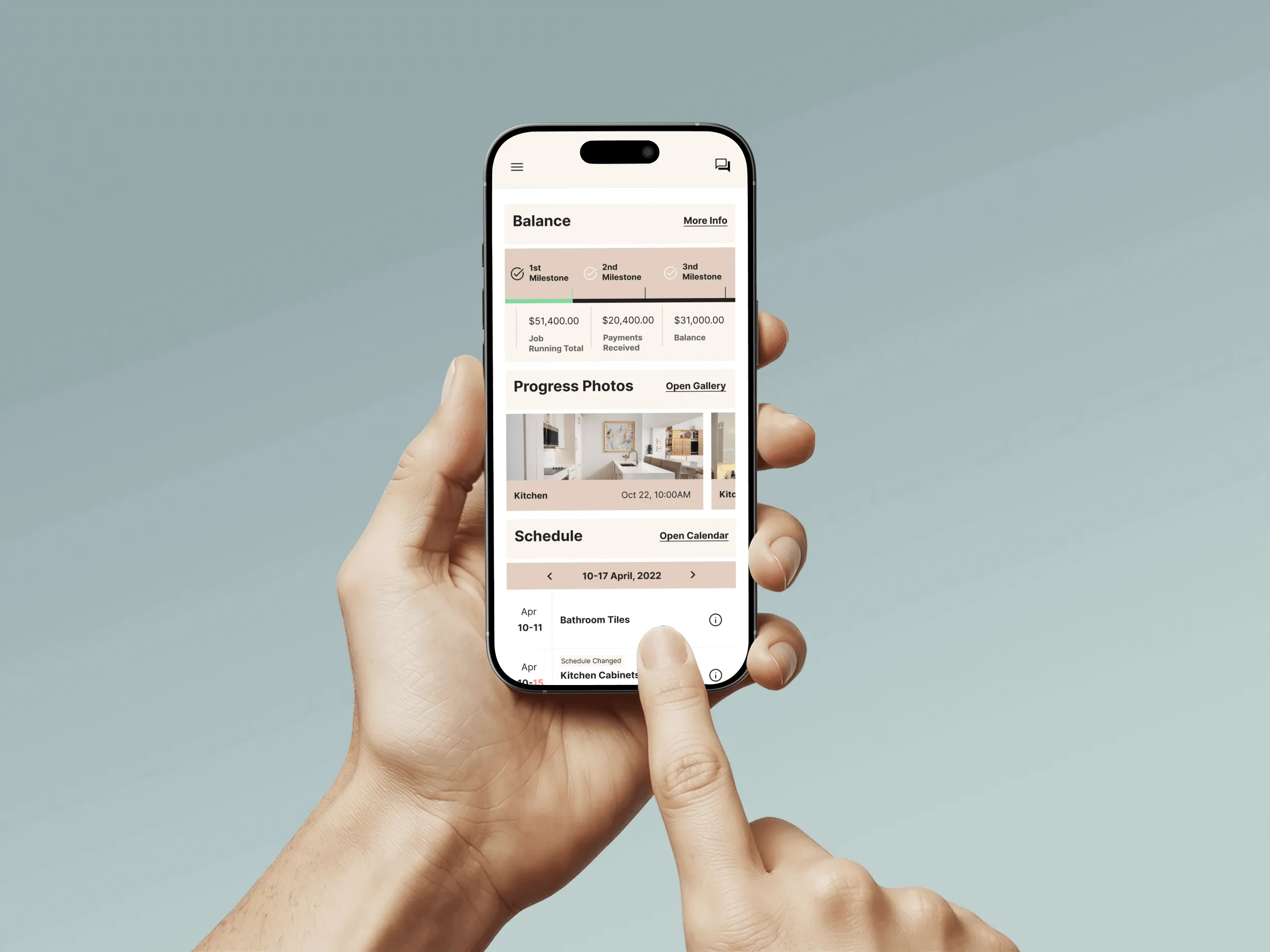
Chapter Renovation's Renotech™ keeps every workstream visible and aligned in real time. Latency, the time between when a decision is needed and when it gets made is the silent killer of renovation timelines. Renotech™ is designed to eliminate it.
Final thoughts
Renovations succeed when the team running them understands which phases are most prone to delay and structures the work to prevent it. The fastest contractors are not the ones who work hardest during construction. They are the ones who prevent delays in approvals, start procurement during design, and run closeout with the same discipline as the rest of the project.
Results may vary. Individual timelines depend on scope, building approvals, local permitting and regulatory approvals, material selections, and client-driven changes.
Frequently asked questions
Which phase is the most expensive to stall in?
Construction stalls are the most expensive because trades, subcontractors, and overhead costs continue accruing. Approval stalls are time-expensive but lower cost-per-week.
Can phases overlap?
Yes, and they should. A well-organized project runs procurement, approvals, and design in parallel. Sequential execution is the slowest possible model.
What is the critical path?
The longest sequence of dependent tasks that determines the overall project duration. In a well-run renovation, construction is usually the critical path; the front-end phases run in parallel with each other and complete before construction starts.
How long does a full home renovation typically take with Chapter Renovation?
We pride ourselves on efficiency without compromising quality. Our current average project duration is 38 weeks from start to finish. By utilizing our proprietary Renotech™ system, we streamline workflows to ensure your home is move-in ready much faster than industry standards.
What is Renotech™ and how does it benefit my renovation?
Renotech™ is our technology-driven approach to design and construction. It enables high-precision 3D modeling, real-time budget tracking, and seamless communication. This tech ensures your project stays on schedule and eliminates the "guesswork" often found in traditional builds.
Why is your average project timeline 38 weeks?
For full gut renovations and larger scopes, our 38-week average is a direct result of our integrated design-build model and Renotech™ integration. By managing both design and construction under one roof, we eliminate hand-off delays and overlapping schedules, allowing us to deliver luxury results in a fraction of the time.
Does the 38-week timeline include the design and permitting phase?
Yes. Our Renotech™ process is designed to fast-track the pre-construction phase, including architectural plans and material sourcing. We hit that 38-week mark by coordinating all logistics and permit filings well before the first hammer swings.
Can I track the progress of my renovation using Renotech™?
Absolutely. Clients have full access to our digital portal powered by Renotech™, where you can view daily updates, track project milestones, and communicate directly with your project lead to ensure everything is progressing toward that 38-week goal.