

Oct 01, 2026 11 min read
Why Your Renovation Is Taking So Long (And How To Fix It)

If you are reading this, you are probably in the middle of a renovation that was supposed to finish months ago. The contractor keeps saying “just a few more weeks.” The site has been quiet for stretches you do not understand. And nobody seems to be able to tell you, in plain language, why the project is running so far behind.

Most renovations that run long are not running long because of any single dramatic event. They are running long because of a small number of structural problems that compound over time. The good news is that these problems are diagnosable. If you can identify which one is happening to your project, you can usually figure out whether the situation is recoverable and what to ask the contractor to do about it.
Here are the seven most common reasons renovations stall.
1. Sequential workflow instead of parallel
This is the most common reason renovations run long. The contractor is doing one thing at a time. The architect produced drawings, then the board package was submitted, then the DOB filing began, then materials were ordered after permits came back. By the time construction started, six or seven months had passed before anyone picked up a tool.
How to spot it:
Ask your contractor when materials were ordered relative to when permits were filed. If procurement started after permits were issued, your project is running sequentially. The fastest contractors begin procurement during design and approvals — not after.
What to do:
At this point in your project, you cannot rerun the front-end. What you can do is push every remaining workstream to run in parallel. Selections that are still open should be closed this week, not over the next month. Inspections should be scheduled before they are needed, not after.
How Chapter Renovation solves sequential delays:
Traditional contractors run one task at a time, letting months slip away before site work begins.
Chapter Renovation operates on a parallel-path model powered by Renotech™, our proprietary digital platform built to coordinate workstreams in real time.
While our DOB and Board Approvals team handles municipal filings, our Interior Design and Procurement teams simultaneously finalize selections and pre-order long-lead materials.
Running these front-end workstreams concurrently is the structural reason Chapter Renovation holds a 38-week average timeline.
2. Plans that keep getting revised
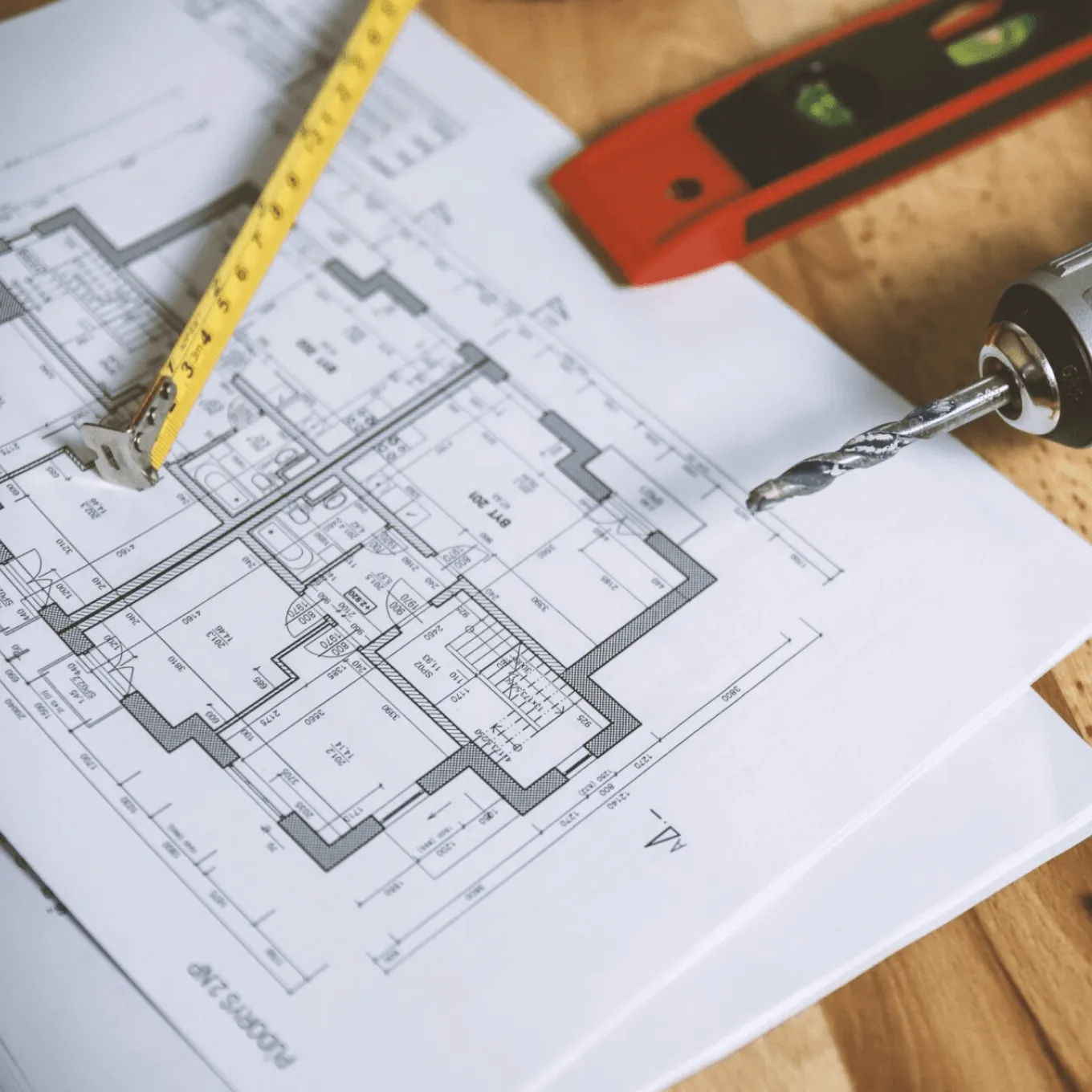
If your design has been revised three or four times - you changed your mind on the kitchen layout, then on the primary bath, then on the millwork, every revision resets multiple downstream workstreams. The architect updates drawings, the DOB filing may need to be revised, the procurement quantities change, the construction schedule shifts.
How to spot it:
Count how many times major design decisions have been revisited. More than two on the same element usually means the revisions are creating the delay, not the construction.
What to do:
Stop revising. The remaining work needs a frozen scope to move forward at speed. A clear conversation with your contractor and designer about which decisions are locked and which are still open will accelerate the rest of the project more than any other single action.
How Chapter Renovation prevents mid-project revision loops:
Frequent design revisions reset downstream schedules and waste months. At Chapter Renovation, we eliminate the guesswork that causes mid-construction change orders through Renotech™. By leveraging its photorealistic 3D pre-visualization and BIM-powered cost modeling during initial design, clients see exact spatial renderings and real-time budget impacts before signing off, locking in scope and keeping your project moving predictably toward a 38-week finish.
3. Procurement that was scheduled too late
Custom cabinetry has 12- to 20-week lead times. Imported stone, custom millwork, certain plumbing fixtures, and specialty appliances all have lead times measured in months. If procurement was scheduled to begin after construction started, your project is now waiting for materials that should have been ordered during approvals.
How to spot it:
Ask your contractor for the procurement schedule. If items with long lead times were ordered within the last few weeks of an active construction project, you are looking at a procurement delay.
What to do:
Identify the longest outstanding item. Negotiate with the supplier on expedite options. Identify whether any in-stock substitutions exist for items that are still on long lead times.
How Chapter Renovation locks in procurement early:
Traditional contractors wait for municipal permits to clear before placing material orders, leaving job sites idle for months.
At Chapter Renovation, our dedicated Procurement team leverages Renotech™ to track real-time lead times and coordinate orders while design and approvals are still underway.
Custom millwork, stone, and fixtures arrive on site precisely when trades are ready, protecting our 38-week schedule from supply chain bottlenecks.
4. Permits or approvals that stalled
Sometimes the project is not actively moving because it is waiting for an approval. The DOB has not issued the permit. The board requested revisions. A specific inspection has not been scheduled. Until the gate clears, downstream work cannot start.
How to spot it:
Ask your contractor specifically what they are waiting for. A clear answer points to the right next action. A vague answer suggests the workstream is not being actively managed.
What to do:
A contractor with relationships at the relevant authority can usually compress this faster than waiting passively. If your current contractor cannot, engaging an expediter or filing specialist may help.
How Chapter Renovation navigates board and DOB approvals:
Permit backlogs and co-op board review loops are where traditional renovations lose the most time.
Chapter Renovation maintains a dedicated DOB and Board Approvals team that uses Renotech™ to manage complex filings and track review statuses across NYC, Miami, and suburban markets in real time.
By submitting complete, code-compliant packages on the first pass, we bypass administrative friction and keep the project on track for our 38-week finish.
5. The one PM is overloaded
Many renovations are managed by a single project manager who is also managing other projects. If that person is the only one tracking your design decisions, procurement orders, board package, and construction schedule, they are a bottleneck. Anything that requires their attention waits for their attention.
How to spot it:
Count how many people on the contractor's team are actively responsible for your project. If the answer is one PM, you are at the mercy of that person's bandwidth.
What to do:
This one is structural. You can ask the contractor to assign additional resources to the remaining workstreams, but if their operating model is one-PM-per-project, the answer will likely be no.
How Chapter Renovation eliminates the single-PM bottleneck:
Relying on a single project manager to juggle design, permits, procurement, site crews, and budgets inevitably creates delays.
Chapter Renovation structures every project with five specialized teams: DOB and Board Approvals, Interior Design, Project Management, Procurement, and Project Financials, seamlessly coordinated through Renotech™.
No single person becomes a bottleneck, ensuring every workstream moves forward in parallel toward our 38-week finish.
6. Change orders that compound
Each change order during construction has a cost beyond the line-item price. New materials need to be ordered. Already-completed work may need to be modified or redone. Inspections may need to be rescheduled. A handful of change orders can quietly add weeks.
How to spot it:
Count change orders. More than three to five on a moderate-scope project is a warning sign that the front-end scope was not adequately defined.
What to do:
Freeze additional change orders unless they are critical. Save other changes for a later phase or a follow-up project.
How Chapter Renovation eliminates budget and timeline creep:
Compounding change orders ruin timelines and inflate costs.
Through Renotech™, we use advanced BIM cost modeling and detailed scope planning to lock in budget accuracy to within 2% before construction starts.
By eliminating unforeseen scope gaps on the front end, we protect both your investment and our 38-week delivery commitment.
7. The contractor is overcommitted
Some contractors take on more projects than their team can actively service. Your project may be technically active but receiving only a fraction of the attention it should. Site visits are infrequent, trades are inconsistently scheduled, and the contractor's responsiveness drops over time.
How to spot it:
Track how many days per week active construction is happening on your site. A whole-home renovation should have meaningful daily activity for most of the construction phase. Long stretches of quiet are a warning sign.
What to do:
A direct conversation about resource allocation. Some contractors will respond by pulling more team to your project. Others will not, in which case the conversation reveals what was already true.
How Chapter Renovation maintains daily momentum:
Traditional contractors frequently overcommit their crews, leaving job sites quiet for days at a time.
Chapter Renovation utilizes AI-assisted schedule optimization and live on-site video monitoring within Renotech™ to manage trade coordination in real time.
Our site teams maintain active, structured daily progress, ensuring every phase executes seamlessly toward our 38-week benchmark.
What recovery looks like when it is possible
Most stalled renovations can be brought back on track, but the path requires honest diagnosis and decisive action. The contractors who recover projects do four things: identify the actual bottleneck (not the convenient explanation), freeze the design scope, push every workstream to run in parallel for the remaining work, and add resources where bandwidth is the constraint.
Projects that cannot be recovered usually have one of two issues: a contractor whose operating model is structurally unable to run in parallel, or a homeowner who continues to add scope and revisions mid-project. Both are addressable, but neither resolves itself.
How Chapter Renovation eliminates the bottleneck to average 38 weeks
The reason traditional contractors take up to 18 months to deliver a project isn't a lack of craftsmanship, it's a structural failure in how work is managed. At Chapter Renovation, we built an operating architecture designed specifically to eliminate that wasted time, maintaining an average completion timeline of 38 weeks across all our markets.
Instead of assigning a single project manager to juggle DOB filings, client selections, vendor orders, and job site management simultaneously, Chapter Renovation staffs every project with five specialized teams running in parallel: DOB/Board Approvals, Interior Design, Project Management, Procurement, and Project Financials. While our Approvals team navigates city permits and co-op boards, our Design and Procurement teams are already locking in long-lead items. No single person becomes a bottleneck, and workstreams don't wait in line.
This multi-team execution is managed through Chapter Renovation's Renotech™, our proprietary platform that replaces phone-and-paper chaos with digital precision. Renotech™ combines BIM cost modeling, 3D pre-visualization, real-time client portals, and AI-assisted schedule optimization to catch delays before they happen and keep every team aligned. By executing parallel workflows on a dedicated tech stack, we deliver full-scope luxury renovations in 38 weeks without sacrificing quality.
How Chapter Renovation approaches recovery projects

Chapter Renovation occasionally takes on renovation projects that are in trouble with another contractor. When we do, the first 30 days are diagnostic. We map every open workstream, identify the bottleneck, freeze open decisions, and rebuild a schedule around parallel execution of remaining work. Our specialist teams: Permitting, Design, PM, Procurement, Financials each take ownership of their workstream end-to-end, removing the single-PM bottleneck that often caused the delay in the first place.
Final thoughts
Renovations that run long are usually running long for diagnosable reasons. Identifying which reason is the right one is the first step to either fixing the situation or making an informed decision about what to do next. Every project has a path forward; the question is whether the current contractor is the right one to take it.
Results may vary. Individual timelines depend on scope, building approvals, local permitting and regulatory approvals, material selections, and client-driven changes.
Frequently asked questions
Can I switch contractors mid-renovation?
It is possible but rarely simple. The new contractor needs to audit the work-in-place, review the contract and approvals, and decide whether the scope is recoverable. Switching adds time before it saves time.
How do I know if the delay is the contractor's fault?
Delays caused by weather, material shortages, or city processing times are often outside the contractor's direct control. Delays caused by procurement scheduling, design coordination, and workstream sequencing are within the contractor's control. The diagnostic questions above usually clarify the distinction.
How long does a full home renovation typically take with Chapter Renovation?
We pride ourselves on efficiency without compromising quality. Our current average project duration is 38 weeks from start to finish. By utilizing our proprietary Renotech™ system, we streamline workflows to ensure your home is move-in ready much faster than industry standards.
What is Renotech™ and how does it benefit my renovation?
Renotech™ is our technology-driven approach to design and construction. It enables high-precision 3D modeling, real-time budget tracking, and seamless communication. This tech ensures your project stays on schedule and eliminates the "guesswork" often found in traditional builds.
Why is your average project timeline 38 weeks?
For full gut renovations and larger scopes, our 38-week average is a direct result of our integrated design-build model and Renotech™ integration. By managing both design and construction under one roof, we eliminate hand-off delays and overlapping schedules, allowing us to deliver luxury results in a fraction of the time.
Does the 38-week timeline include the design and permitting phase?
Yes. Our Renotech™ process is designed to fast-track the pre-construction phase, including architectural plans and material sourcing. We hit that 38-week mark by coordinating all logistics and permit filings well before the first hammer swings.
Can I track the progress of my renovation using Renotech™?
Absolutely. Clients have full access to our digital portal powered by Renotech™, where you can view daily updates, track project milestones, and communicate directly with your project lead to ensure everything is progressing toward that 38-week goal.